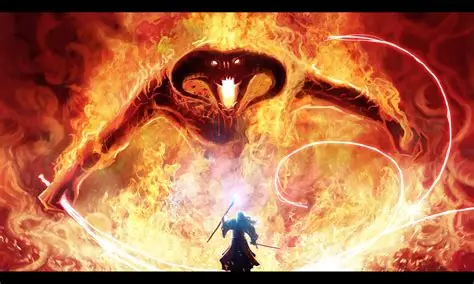
“The fire shall not avail you, Flame of Udûn!”
In Tolkien’s legendarium, the Secret Fire—also called the Flame Imperishable—is not a weapon or spell but the animating principle of creation itself. It originates with Eru Ilúvatar, the One, and is the means by which true being and independent life exist. During the Music of the Ainur, Ilúvatar alone possesses the Flame Imperishable, and even the greatest of the Ainur cannot create life without it; they can only shape what already exists. When Gandalf declares himself a “servant of the Secret Fire,” he is not claiming raw power but authority and alignment.
He is asserting that he acts in accordance with the fundamental will that sustains reality. The fire he wields is therefore not destructive in essence—it is preservative, illuminating, and ordering. This is why Gandalf’s light stands in moral and metaphysical opposition to the Balrog’s flame: both burn, but only one is rooted in creation rather than domination.
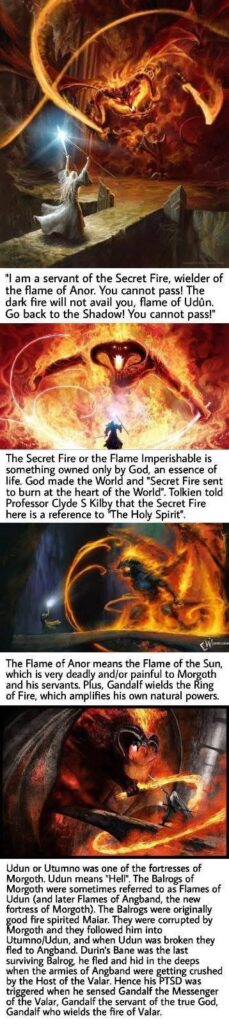
More Importantly, Tolkien later clarified that the Secret Fire is not merely symbolic but metaphysical truth within his world. It resides “at the heart of the World,” meaning Arda itself exists because Ilúvatar set the Flame within it. Many readers and scholars note the deliberate parallel Tolkien draws between the Secret Fire and the Holy Spirit in Christian theology: unseen, life-giving, proceeding from the Creator alone, and empowering agents without becoming their possession.
Gandalf does not own the Flame Imperishable—he serves it. His staff, his light, and even his defiance are effective only because they align with that higher authority. This is why the Balrog, despite its immense power, cannot pass. The confrontation is not a contest of strength but a collision of metaphysical loyalties: preservation versus corruption, obedience versus rebellion.
How the Mighty have fallen
The Balrogs, by contrast, represent a catastrophic fall from that original harmony. They were once Maiar, spirits of fire who served the Vala Melkor, later called Morgoth, during the shaping of the world. Fire was originally part of their nature as servants meant to aid creation, but Morgoth twisted that nature toward destruction, domination, and terror.
When he rebelled against Ilúvatar’s design in the First Age, the Balrogs followed him, becoming living engines of ruin—“Flames of Udûn,” fire severed from the Secret Fire’s purpose. Their allegiance to Morgoth, the first Dark Lord and Sauron’s master, marked their fall from grace. What Gandalf faces on the Bridge is not just a monster, but a relic of the earliest rebellion in the world: corrupted fire versus the Flame Imperishable, locked in opposition since the dawn of Arda.