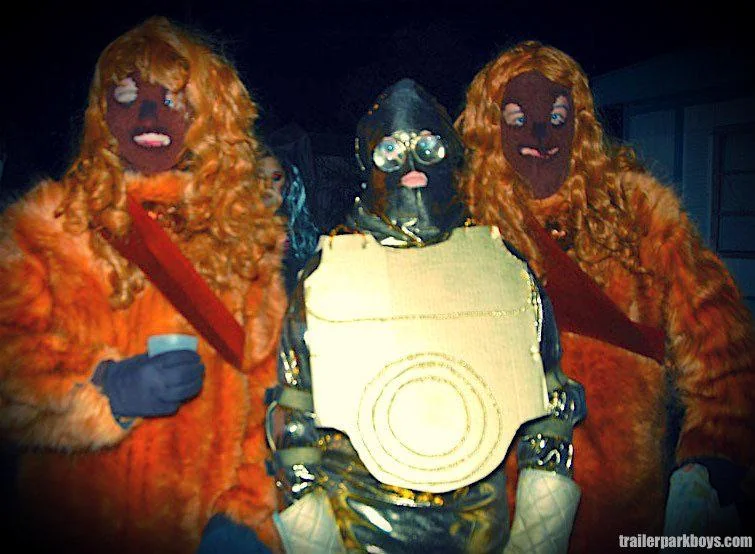
These two images capture something that’s easy to forget now: fan culture existed before infrastructure. No forums, no freeze-frames, no merch racks—just obsession, patience, and a lot of trial-and-error. It is easy to forget in the modern day of COMIC CONS and full time cosplayers, that the world weasn’t always this way. WE get a gplimpse at the first generation of COSPLAYERS right here and they didn’t even know they were pioneering ANYTHING. So in that spirit, here are the fuller stories behind both.
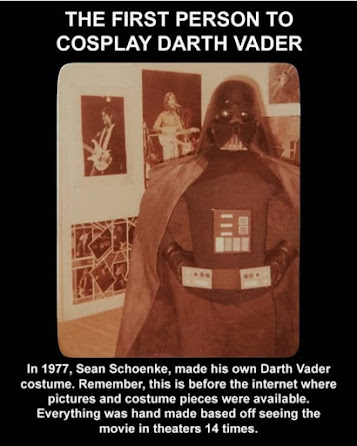
Sean Schoenke’s Darth Vader costume is often cited as the first known Vader cosplay
created in the same year Star Wars debuted. Like TJ, he worked in an era with almost no reference material—but his challenge was even greater.
Darth Vader is:
- Almost entirely black
- Frequently shot in shadow
- On screen for limited, dramatic moments
- Covered in textures and details that are easy to miss
Sean didn’t have:
- Blu-rays
- Behind-the-scenes books
- Licensed helmets or armor
- Clear images of the chest panel or belt
What he did have was:
- Repeated viewings of the movie (reportedly 14 times in theaters)
- Sketches based on memory
- A willingness to invent details where information was missing
The result is fascinating: a Vader that is recognizable but interpretive. The helmet shape is off by modern standards. The chest box layout is simplified. The fabric choices reflect what was available in the late ’70s, not what ILM actually used. But none of that mattered—because in 1977, this was as close as anyone on Earth could get.
This costume represents something bigger than accuracy. It’s evidence of fans transitioning from passive viewers to active participants. Sean wasn’t trying to win contests or impress a convention crowd—those barely existed yet. He was responding to a cultural shockwave in real time, turning awe into creation.
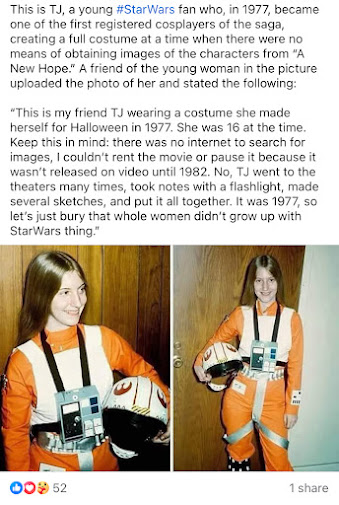
‘TJ’s’ Story
TJ was a young Star Wars fan in 1977 the same year A New Hope hit theaters. What makes her costume remarkable isn’t just that it exists—it’s how it was made.
At the time:
- There was no internet
- No home video release (Star Wars wouldn’t hit VHS until the early 1980s)
- Very little official merchandise
- Almost no published reference photos
To build her Rebel pilot outfit, TJ relied on:
- Multiple theatrical viewings of the film
- Handwritten notes taken in the dark with a flashlight
- Memory, sketches, and guesswork
- Everyday materials repurposed into sci-fi components
The chest box wasn’t bought—it was constructed from scratch, based on brief glimpses on screen. The helmet wasn’t accurate by modern standards, but it didn’t need to be. Accuracy wasn’t the point yet—recognition was. The orange flight suit, the white flak vest, the hoses and boxes: together, they read immediately as “Star Wars” to anyone who had seen the movie.
What makes TJ’s story especially important is that it predates the idea of cosplay as a hobby. She wasn’t part of a scene. She wasn’t following a trend. She was simply a fan who loved something enough to recreate it blind, at a time when that took real effort. This wasn’t nostalgia cosplay—it was first-generation fandom.